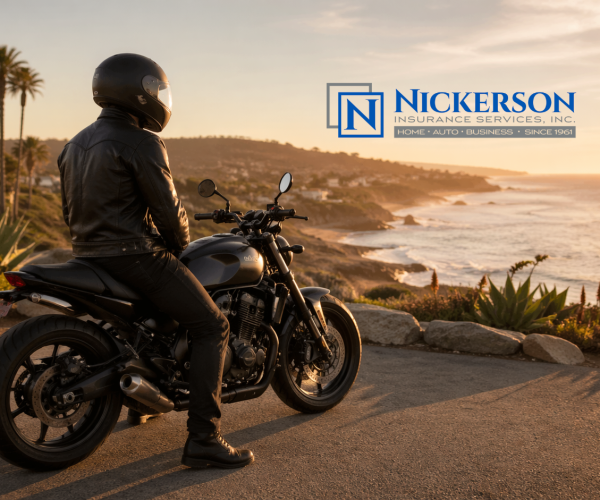
When the riding season begins, many riders pull their bikes out of storage and head straight for the road. However, this is also the perfect time to review your motorcycle insurance. The right coverage can help protect you from expensive surprises, whether that means a crash, theft, or damage involving another driver.
Here are 10 common motorcycle insurance questions riders are asking in 2026 – and the answers every rider should know.
1. Is motorcycle insurance required?
Yes. In California, you must show proof of financial responsibility for a motorcycle that is operated or parked on public roads, and proof of insurance may be required by law enforcement, at registration renewal, or after an accident. California DMV lists the current minimum liability limits as $30,000 for injury or death to one person, $60,000 for injury or death to more than one person, and $15,000 for property damage.
2. What does motorcycle insurance usually cover?
A motorcycle policy usually starts with liability coverage, which helps pay for injuries or property damage you cause to others. Riders can also choose optional protection such as collision coverage for crash damage to their own bike and comprehensive coverage for theft, vandalism, fire, or certain weather-related losses.
3. What is not covered by a basic liability policy?
A basic liability-only policy does not pay to repair your own bike after a crash. It also does not cover theft, vandalism, or most other damage to your motorcycle. In California, liability insurance is the legal foundation for financial responsibility, so having only collision or comprehensive would not satisfy the state requirement by itself.
4. Do I really need more than the state minimum?
For many riders, yes. State minimum limits may help you stay legal, but they may not be enough after a serious accident involving injuries, multiple people, or costly property damage. If your motorcycle is newer, financed, customized, or expensive to repair, broader protection may make much more sense than choosing the lowest limits available. California DMV confirms that the minimum limits are only the minimum required by law.
5. Is theft covered under motorcycle insurance?
Usually, theft is covered only if you carry comprehensive coverage. Many riders assume theft is automatically included, but that is not typically the case with liability-only coverage. If your bike is parked outside often, stored in a shared garage, or used regularly during the season, this is one of the most important coverages to review.
6. What happens if an uninsured driver hits me?
That is where uninsured or underinsured motorist coverage can be very valuable. This coverage can help with injuries if the at-fault driver has no insurance or not enough insurance to cover the loss. Riders often focus on protecting the motorcycle itself, but this type of coverage helps protect you financially when the other driver cannot.
7. Are custom parts and accessories covered?
Not always. Custom paint, upgraded exhaust systems, chrome parts, saddlebags, and other add-ons may have limited coverage unless they are specifically included in your policy or added through an endorsement. If you have invested in personalizing your motorcycle, it is worth checking whether your policy reflects the real value of the bike as it sits today.
8. If my motorcycle is financed, what coverage do I need?
If you finance your motorcycle, your lender will often require more than just liability insurance. In many cases, lenders want collision and comprehensive coverage because the bike is still part of the loan agreement. California DMV also requires proof of insurance for registration, but lender requirements are often stricter than the legal minimum.
9. Do I need motorcycle insurance for the whole year in California?
In most cases, yes. If your motorcycle is actively registered for road use in California and is being operated or parked on a public road, you must maintain proof of financial responsibility. California DMV also says you should notify DMV before canceling your insurance to avoid a registration suspension. If the motorcycle will not be operated and will not be parked on any California roadway, you may file an Affidavit of Non-Use. If you do not plan to use the motorcycle for the registration year, you may instead file for Planned Nonoperation (PNO). A motorcycle on PNO status cannot be driven, towed, stored, or parked on public roads until normal registration requirements are satisfied again.
10. How can riders make smarter insurance decisions in 2026?
Start with how you actually use your bike. A rider who commutes several days a week may need different protection than someone who only rides on occasional weekends. Review your liability limits, consider whether theft protection matters where you live, and make sure your accessories and usage are reflected accurately in the policy. It is also smart to confirm that your proof of insurance and registration are up to date before peak riding season begins. California DMV says evidence of insurance must be carried in the vehicle and provided when requested.
Motorcycle insurance is not just about meeting a legal requirement. It is about choosing coverage that matches your bike, your riding habits, and the risks you want to prepare for before the season gets busy.
If you want help reviewing your motorcycle insurance options for 2026, contact Nickerson Insurance Services, Inc. We can help you compare coverage, understand your options, and choose protection that fits the way you ride. If you would like to find out more about moped insurance or e-bike insurance, click here.