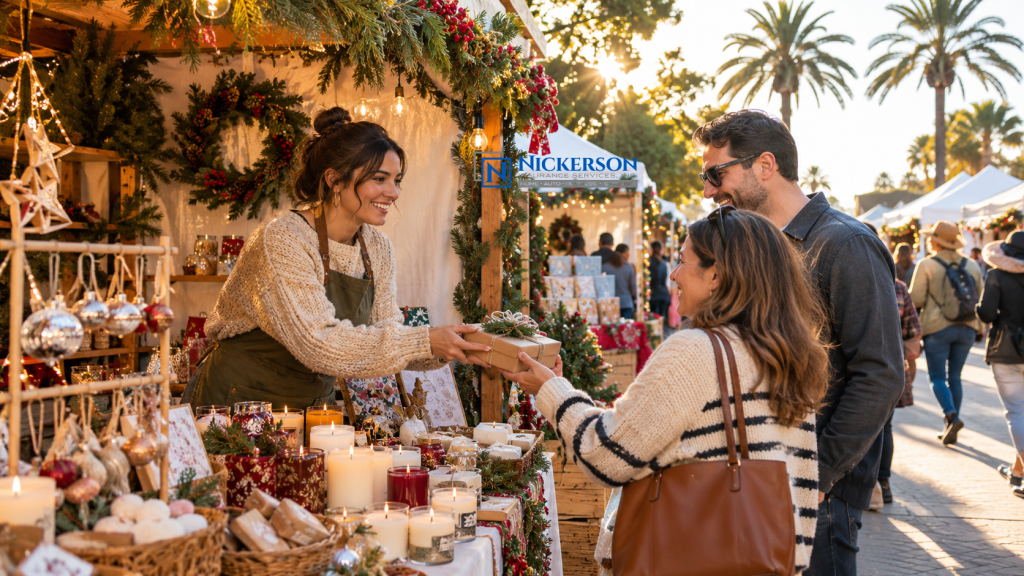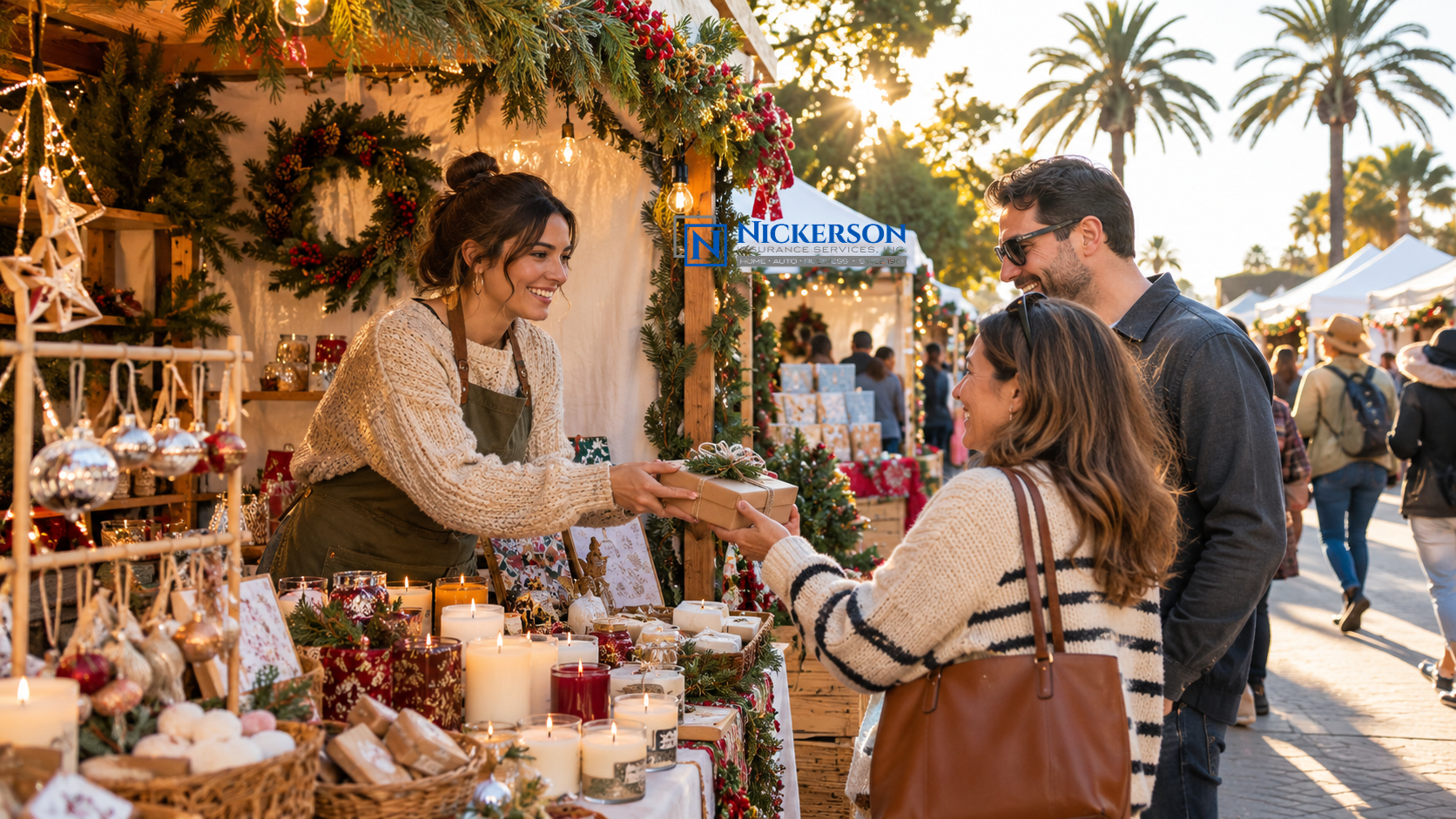
Holiday markets are a great opportunity for small businesses to reach new customers, showcase their products, and increase sales during the busiest shopping season of the year.
Whether you’re selling handmade candles, jewelry, clothing, baked goods, or holiday decorations, setting up a booth involves more than preparing inventory and decorating your display.
There’s one important detail that’s easy to overlook: insurance.
Many holiday market organizers require vendors to carry liability insurance before participating. And even when coverage isn’t mandatory, an unexpected accident could leave your business facing expenses you weren’t prepared for.
Here’s what California vendors should know before their next holiday event.
Do You Need Insurance to Sell at a Holiday Market in California?
The short answer is: It depends on the event, but many organizers require it.
California doesn’t have a universal rule requiring every holiday market vendor to purchase general liability insurance simply to operate a booth. However, individual event organizers, venues, and property owners can establish their own insurance requirements.
For example, an organizer might require vendors to carry $1 million in general liability coverage and provide proof of insurance before setting up.
Why?
Imagine a customer trips over an extension cord at your booth and suffers an injury. Or your display accidentally damages another vendor’s merchandise.
General liability insurance may help cover eligible third-party injury or property damage claims, including certain legal defense expenses.
Before registering for a holiday market, ask the organizer:
Is general liability insurance required?
What coverage limits do vendors need?
Do I need to name the organizer or venue as an additional insured?
When must I submit proof of coverage?
Getting these answers early can save you from scrambling for insurance just days before the event.
Can You Buy Insurance for Just One Day or One Weekend?
Yes. Short-term vendor liability insurance is available for certain types of businesses and events.
If you’re participating in a single weekend market, you may not need a full-year policy just for that event.
Depending on your business and the insurer, coverage options may include single-day, multi-day, or annual policies.
However, short-term coverage isn’t necessarily the right choice for every vendor.
If you regularly participate in farmers markets, craft fairs, festivals, or other events throughout the year, an annual policy might be more practical.
It’s also important to check what’s included. Some short-term liability policies may not cover product-related claims, damage to your own inventory, or every activity associated with your booth.
An insurance agent can help you compare available options based on how often you sell, what products you offer, and the requirements of each event.
How Much Does Holiday Market Vendor Insurance Cost?
The cost varies depending on several factors, including:
What you sell: Handmade accessories may present different risks than food, cosmetics, or candles.
How long the event lasts: A one-day market and a month-long seasonal shop may require different coverage arrangements.
Where you operate: Indoor venues and outdoor events can involve different exposures.
Coverage requirements: Higher liability limits or additional endorsements may affect the premium.
Your existing insurance: Your current business policy may already provide some coverage for temporary retail operations.
Some providers advertise basic short-term vendor liability policies starting around $49 for a one-to-three-day event. However, these are starting prices for specific policies, not guaranteed quotes for every California vendor.
More comprehensive protection or higher-risk activities can cost more.
The best approach is to compare coverage, not just the price. A low-cost policy isn’t much help if it excludes the activities or products your business needs insured.
What Is a Certificate of Insurance (COI), and How Do You Get One?
If you’ve registered for a holiday market, you may have received an email asking for a Certificate of Insurance, often called a COI. A COI is a document that provides evidence of your insurance coverage.
It typically identifies your insurance company, policy number, coverage types, limits, and effective dates.
To obtain one, contact your insurance agent or carrier and provide the event organizer’s insurance requirements.
Some organizers also request an additional insured endorsement, which can extend certain liability protections to the organizer or property owner.
This is an important distinction: simply listing an event organizer on your certificate doesn’t automatically make them an additional insured.
Your agent can help determine whether your policy includes the appropriate endorsement and whether any changes are needed.
Tip: Send the organizer’s exact insurance instructions to your agent rather than trying to interpret the requirements yourself.
Does Your Existing Business Insurance Cover Holiday Markets?
If you already own a retail business, online store, or home-based business, you might have insurance in place.
But don’t assume it automatically covers every holiday event.
Coverage for temporary locations, off-site inventory, product liability, and outdoor sales varies by policy.
For example, a policy covering your regular retail location might not provide the same protection for merchandise transported to a holiday market.
Before your event, ask your insurance agent:
“Does my current business insurance cover me while selling at this holiday market, including setup, sales, and breakdown?”
It’s a simple question that could reveal an important coverage gap.
What If You’re Bringing Employees to Help?
If you’re hiring someone to help with sales, inventory, or booth setup, workers’ compensation insurance is another important consideration.
California generally requires employers to carry workers’ compensation insurance even if they have only one employee, including part-time or seasonal employees.
This coverage provides benefits for covered work-related injuries and illnesses.
If you’re operating independently without employees, your requirements may be different. However, you should still review any workers’ compensation provisions in your event agreement.
Your Holiday Market Insurance Checklist
Before loading up your products and heading to the event, make sure you’ve covered these essentials:
- Review the organizer’s insurance requirements.
- Confirm your liability coverage meets the required limits.
- Check whether your existing business policy covers the event.
- Ask about product liability coverage for the items you’re selling.
- Confirm whether your inventory and equipment are insured off-site.
- Request your Certificate of Insurance and any required additional insured endorsement.
- Verify your coverage dates include setup and breakdown, when necessary.
- Confirm workers’ compensation requirements if you have employees.
Taking care of these details ahead of time lets you focus on what matters most: connecting with customers and making the most of the holiday shopping season.
Get Your Business Ready for the Holiday Season
A holiday market may last only a weekend, but protecting your business shouldn’t be an afterthought.
Whether you’re attending your first craft fair or participating in multiple seasonal events, understanding your insurance options can help you prepare with greater confidence.
At Nickerson Insurance Services, we help California business owners navigate their commercial insurance needs and explore coverage options that fit their operations.
Planning to sell at a holiday market?
Contact Nickerson Insurance Services to review your current coverage or discuss insurance options before your next event.
Coverage availability, terms, conditions, and exclusions vary by policy and insurer. This article provides general information and does not guarantee coverage for any particular claim or event.