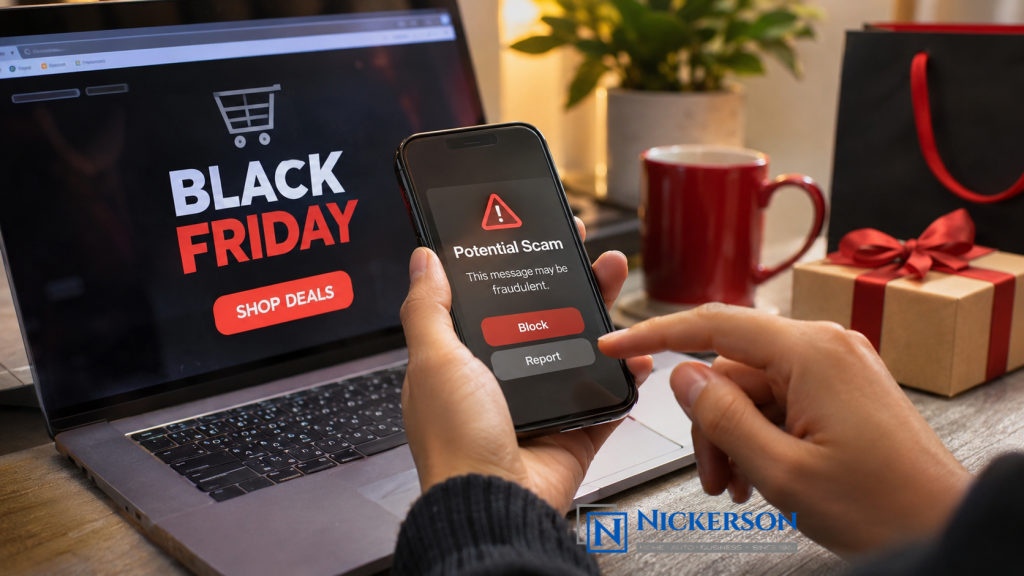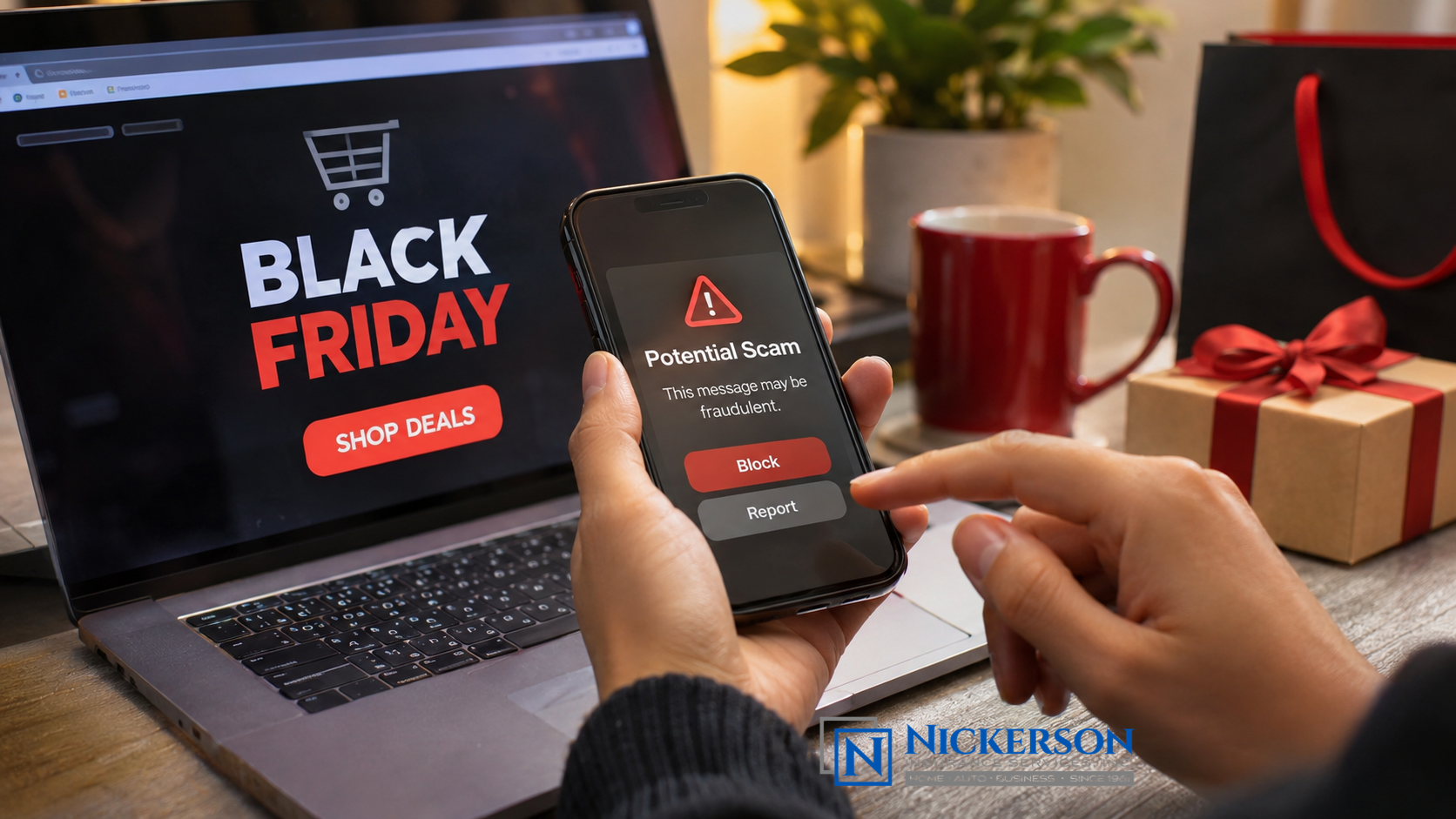
Black Friday used to come with a familiar warning: If a deal looks too good to be true, it probably is.
That advice still matters. But in 2026, spotting a scam isn’t always as simple as recognizing a suspicious website or an unbelievable discount.
Today’s scammers can create realistic product images, personalized messages, convincing customer support conversations, and emails that appear to come from people you already do business with.
And they’re getting better at it.
According to a November 2026 report from Malwarebytes, 28% of surveyed consumers said they had experienced an AI-related shopping scam in the past year, while 77% expressed concern about fake AI-generated retail websites, products, or reviews.
For shoppers and business owners alike, the holiday rush creates opportunities for fraud that can be surprisingly difficult to recognize.
Here’s what deserves your attention this Black Friday.
For Shoppers: The Scam May Start After You Buy
Most people know to be cautious when shopping on unfamiliar websites. But some of today’s scams target consumers who have already made legitimate purchases.
1. The Refund You Weren’t Expecting
Imagine ordering a gift from a well-known retailer.
A few days later, you receive a message explaining that one item is unavailable and you’re entitled to a refund.
The message looks professional. It might include the retailer’s logo, a reference to a recent order, and a link to claim your money.
There’s just one problem: The message isn’t from the retailer.
Instead of receiving a refund, you could end up sharing your login credentials or financial information with a scammer.
What to do: If you receive an unexpected refund notification, open the retailer’s official app or website and check your order history. Don’t use the link in the message.
2. Customer Support That Isn’t Really Customer Support
You’ve been waiting for a package, and something goes wrong.
You leave a comment on a retailer’s social media page. Shortly afterward, someone claiming to represent customer support offers to help.
They seem friendly, knowledgeable, and ready to resolve your problem.
They may even direct you to a convincing support page or use AI-generated responses to make the conversation feel legitimate.
Eventually, however, they ask for something they shouldn’t need: your password, a verification code, or sensitive payment information.
The danger isn’t necessarily an obvious scam message. It’s the appearance of genuine assistance at exactly the moment you need it.
What to do: Contact customer support through the retailer’s verified website or app. Never share one-time login codes with someone who contacts you unexpectedly.
3. AI-Generated Reviews That Make Bad Purchases Look Good
Online reviews have become an important part of holiday shopping decisions.
Unfortunately, AI makes it easier to produce convincing product descriptions, photographs, and customer testimonials that don’t reflect a product’s actual quality or even its existence.
A product listing might feature beautiful images, enthusiastic reviews, and detailed descriptions without offering a reliable picture of what you’ll receive.
Before purchasing from an unfamiliar seller, look beyond the reviews displayed on its own website. Research the retailer independently, compare product information across trusted sources, and check its return policies.
The important lesson for 2026: A professional-looking website or a five-star rating isn’t proof that a seller is trustworthy.
For more traditional warning signs, revisit our Black Friday Shopping Safety Guide.
For Business Owners: Fraud Can Hide in Everyday Transactions
Businesses face a different challenge during Black Friday and the holiday season.
More orders, more invoices, temporary employees, changing schedules, and tighter deadlines can make unusual requests seem like just another part of a busy workday.
Criminals can take advantage of that environment without launching a sophisticated cyberattack.
1. The Vendor Who Suddenly Changes Bank Accounts
Your business has worked with the same supplier for years.
An invoice arrives shortly before a holiday deadline, but this time the supplier explains that its banking details have changed.
The email comes from a familiar contact, references a real transaction, and requests payment before the long weekend.
Everything appears normal.
But the message could be part of a business email compromise (BEC) scheme, in which criminals impersonate trusted business contacts or gain access to legitimate email conversations.
The FBI identifies these schemes as among the most financially damaging forms of online crime.
How to protect your business: Independently verify any change to payment instructions using a phone number already on file. Consider requiring approval from two employees before changing vendor banking details.
2. Fake Invoices That Blend Into Holiday Expenses
During the holiday season, businesses often purchase additional inventory, promotional materials, shipping services, and supplies.
That creates an opportunity for scammers to submit invoices for goods or services that were never ordered.
A fraudulent invoice may resemble a legitimate supplier’s document or reference a familiar purchase category.
When an accounting department is processing dozens of transactions, an unfamiliar charge can be overlooked.
How to protect your business: Match invoices to approved purchase orders and delivery records. Establish clear authorization procedures, especially for unexpected or unusually urgent payments.
3. The Large Order That Turns Into a Loss
A new customer contacts your business with an unusually large holiday order.
They appear eager to purchase, have a convincing business identity, and may even offer to pay immediately.
Then something changes.
Perhaps they request a refund to a different payment method, ask you to redirect a shipment after payment, or provide payment confirmation that hasn’t actually cleared.
These situations can be signs of payment or order fraud.
How to protect your business: Verify large or unusual transactions, confirm that payments have actually settled, and follow consistent procedures for refunds and shipping changes.
A busy sales season shouldn’t mean abandoning the safeguards that protect your business throughout the year.
Can Insurance Help If a Black Friday Scam Costs You Money?
Preventing fraud is always the first line of defense. But what happens when a convincing scam succeeds?
The answer depends on the circumstances and the insurance coverage in place.
For individuals, financial losses caused by online shopping scams are not automatically covered by homeowners or renters insurance. Certain identity theft-related expenses may be addressed by optional coverage, but reimbursement for money voluntarily transferred to a scammer can be limited or excluded.
For businesses, cyber liability insurance may help with certain covered cyber incidents, but not every fraudulent payment qualifies as a cyber insurance claim.
For example, losses caused by fraudulent payment instructions or employee deception may require specific social engineering fraud or crime coverage. Policy definitions, exclusions, sublimits, and verification requirements can all affect whether a claim is covered.
This distinction matters because a business can lose money to a scam without experiencing a traditional data breach or ransomware attack.
If your company regularly processes electronic payments, works with multiple vendors, or handles large transactions, it’s worth reviewing how your insurance addresses these scenarios.
You can also read our article, Cyber Insurance: What Every Business Owner Needs to Know Before a Data Breach, for a closer look at business cyber protection.
One Simple Habit Can Make a Big Difference
Despite increasingly sophisticated technology, many scams still depend on a surprisingly simple strategy: getting someone to act before they have time to verify a request.
A shopper wants to secure a refund.
An employee wants to pay a supplier before the holiday weekend.
A business owner wants to fulfill a valuable order.
In each situation, the request may seem routine, reasonable, or urgent.
That’s why one of the most useful habits this Black Friday is also one of the simplest:
Pause. Verify. Then act.
Whether you’re spending $100 on holiday gifts or approving a $10,000 business payment, a quick independent check could prevent a much larger problem.
Protect What Matters Beyond Black Friday
Scammers continue to adapt, and their methods won’t disappear when the holiday sales end.
At Nickerson Insurance Services, Inc., we help individuals, families, and businesses understand their insurance options and identify potential gaps in coverage.
While insurance cannot prevent every scam or guarantee reimbursement for fraud-related losses, understanding your protection before something happens is an important part of managing financial risk.
Have questions about your personal or commercial insurance coverage?
Contact the Nickerson Insurance Services, Inc. team to discuss your needs and explore available coverage options.
Insurance coverage is subject to the terms, conditions, limits, and exclusions of each individual policy.